

In this article
- Where did Moringa oleifera originate?
- Why did moringa travel so widely?
- How has moringa been used in Ayurveda?
- How has moringa been used as food in other countries?
- What do the common names tell us?
- How did moringa become a modern supplement?
- How can traditional use be understood today?
- Traditional use and modern product information
Where did Moringa oleifera originate?
Moringa oleifera is native to the Indian subcontinent. Over generations it was cultivated more widely throughout warm regions because the tree grows quickly and provides several useful plant parts.
Today it is found throughout parts of Asia, Africa, the Americas, the Caribbean and the Pacific.
Why did moringa travel so widely?
The moringa tree is well suited to warm climates and can tolerate seasonal dry conditions once established. Leaves, pods and seeds also had practical value, which encouraged cultivation beyond its original range.
Its modern popularity is only one chapter in a much longer agricultural and cultural history.
How has moringa been used in Ayurveda?
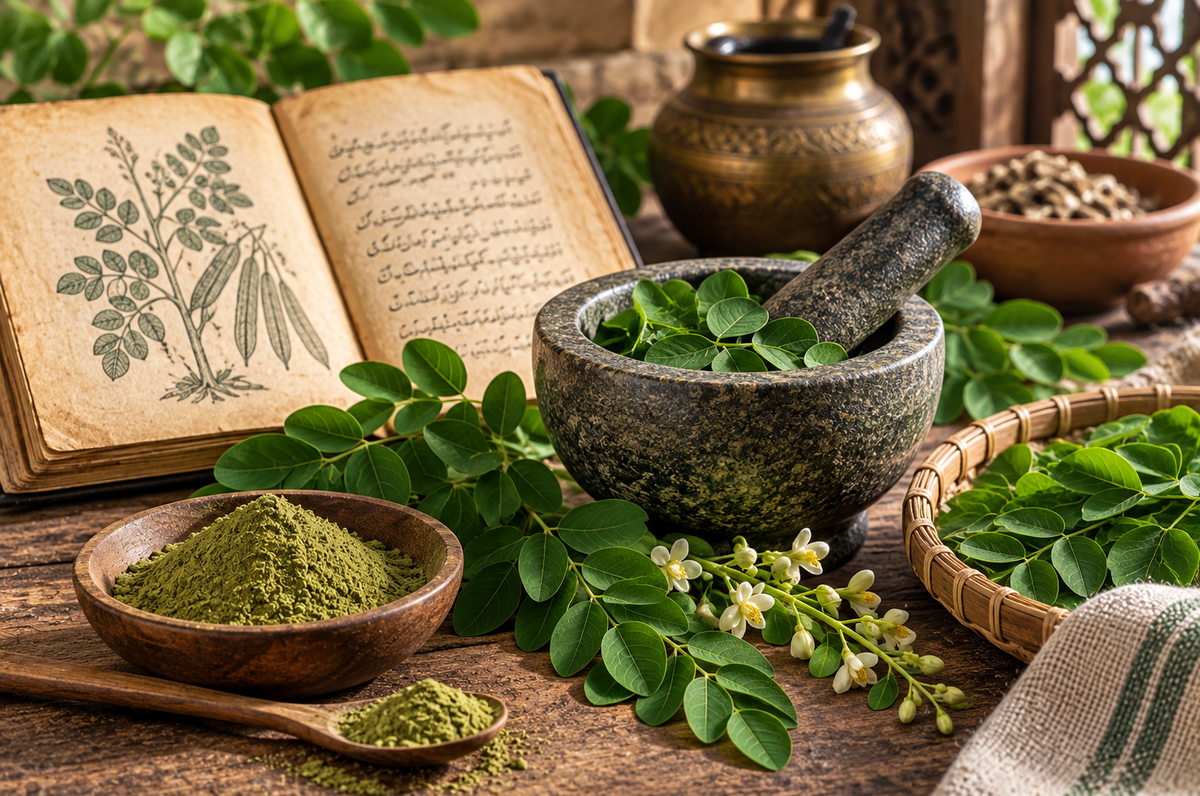
Ayurveda is a traditional system of medicine originating in the Indian subcontinent. Moringa has a place within this tradition, with different plant parts used in different preparations.
Forest Super Foods Moringa carries the traditional indication: traditionally used in Ayurvedic medicine to help relieve inflammation.
How has moringa been used as food in other countries?
In countries with an established history of food use, fresh moringa leaves and immature pods have been incorporated into traditional dishes.
Australia treats moringa differently. Moringa oleifera is not currently permitted for retail sale as a food or food ingredient here, so Forest Super Foods supplies it as a listed capsule medicine.
What do the common names tell us?
“Drumstick tree” refers to the long pods, “ben oil tree” to oil pressed from the seeds and “horseradish tree” to the pungent root.
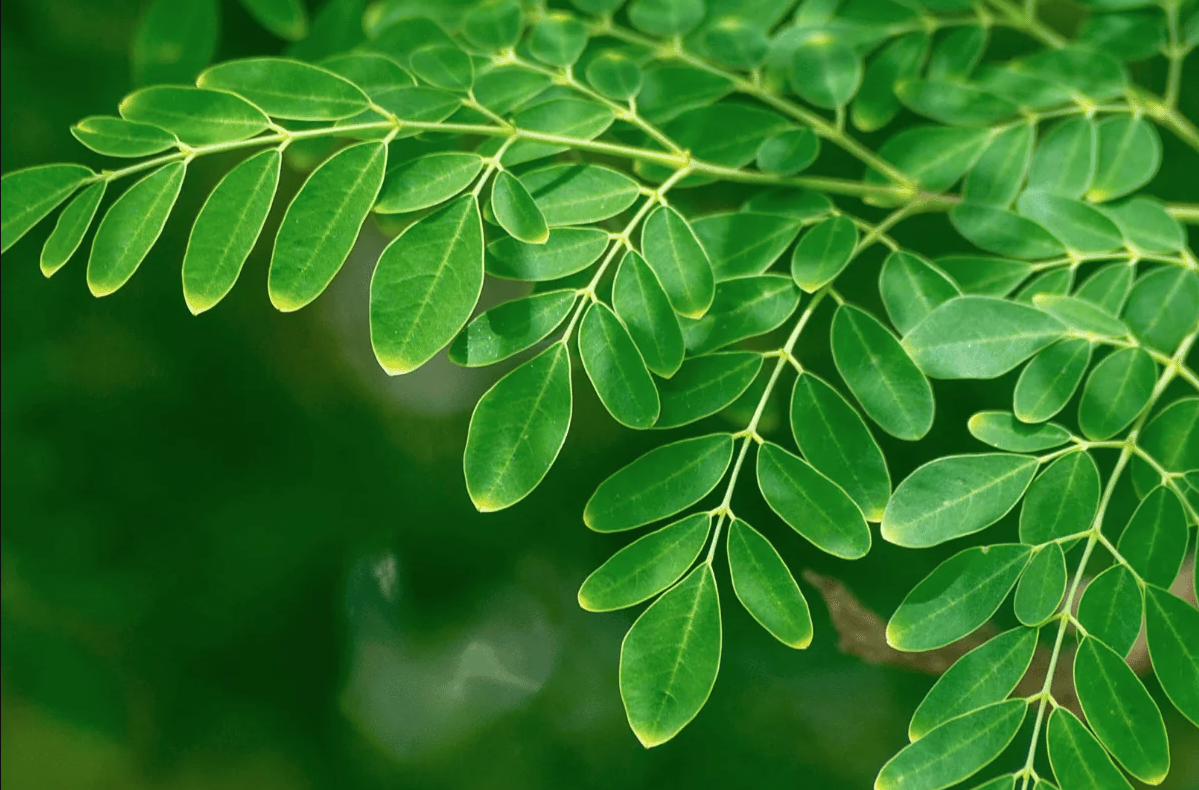
These names are reminders that moringa is a whole tree with many different plant parts. Forest Super Foods uses the leaf only.
How did moringa become a modern supplement?
Interest in traditional botanicals and plant-based nutrition brought moringa into modern supplement formats, including powders, extracts and capsules.
Forest Super Foods chose a whole-leaf format. Each capsule contains 500 mg of Moringa oleifera leaf powder.
How can traditional use be understood today?
Traditional use tells us how a plant has been understood and used within a particular medical tradition. It is most meaningful when the tradition is named clearly rather than reduced to a vague claim about “ancient wisdom”.
For Forest Super Foods, the Ayurvedic basis is stated directly wherever the traditional inflammation indication is used.
Traditional use and modern product information
Traditional history and modern product information can sit comfortably together. The history explains where moringa comes from and how it has been used, while the label tells you exactly what is inside the current Australian product and how it should be taken.
That gives the consumer both cultural context and practical information without blurring the two.
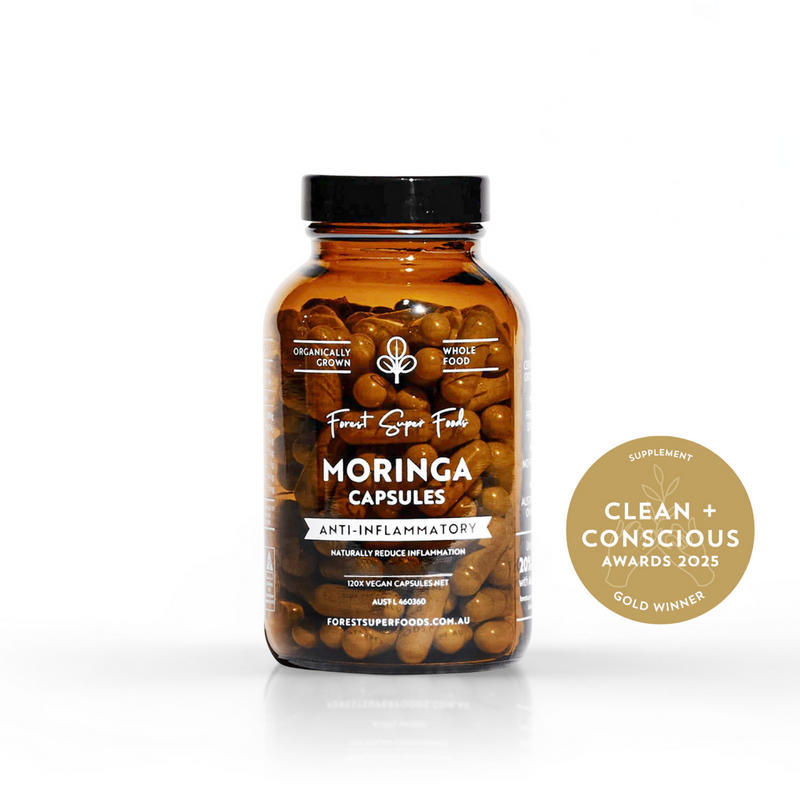
Forest Super Foods Moringa Capsules
Whole Moringa oleifera leaf, 500 mg per capsule, with a traditional Ayurvedic indication to help relieve inflammation.
Organic Moringa CapsulesA powerful supplement for your health and wellness. Order Now |

|
Frequently asked questions
Is moringa an Ayurvedic herb?
Moringa has a documented place in Ayurveda. Forest Super Foods Moringa is traditionally used in Ayurvedic medicine to help relieve inflammation.
Was moringa traditionally eaten?
Leaves and pods have a history of food use in some countries. Australian regulation is different and does not currently permit moringa as a retail food ingredient.
Which part does Forest Super Foods use?
Moringa oleifera leaf only.


Leave a comment
All comments are moderated before being published.
This site is protected by hCaptcha and the hCaptcha Privacy Policy and Terms of Service apply.